
Managed services or in-house IT: comparing responsibility and total cost
Compare internal staffing, managed operations and hybrid arrangements using the same coverage, scope and recovery requirements.
By UNIXDEV Team · 3 min read
Original published · English edition
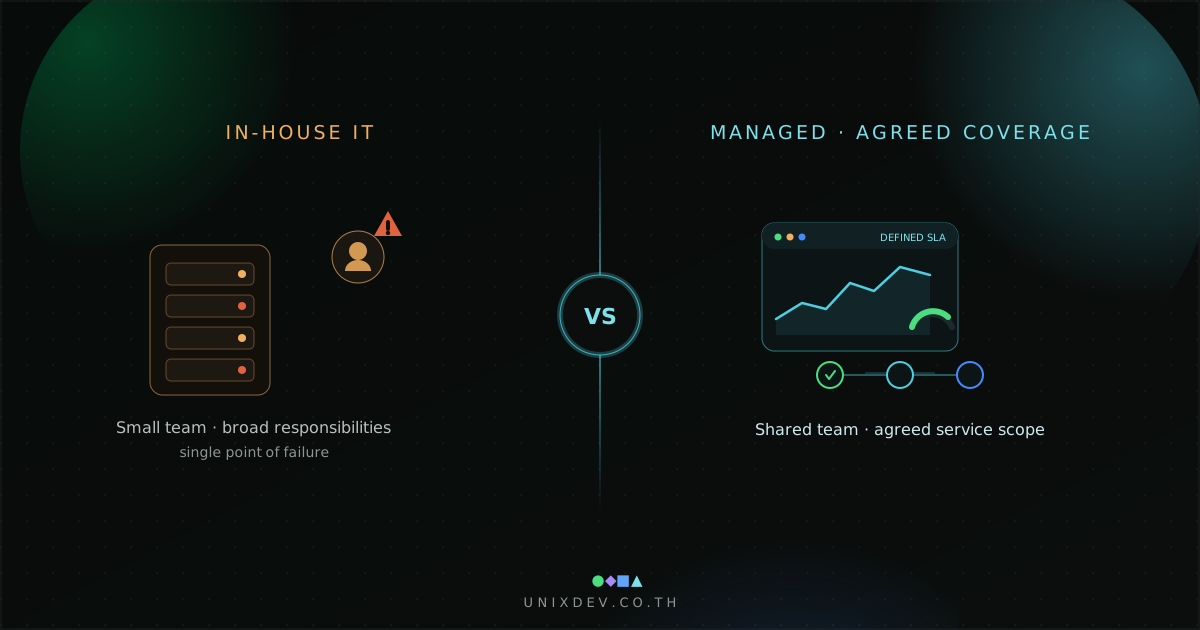
The right operating model depends on the work and the coverage your business needs. A monthly service fee and an employee’s salary are not directly comparable totals.
What an in-house team provides
An internal team can retain deep business context and work closely with application owners. It also needs recruitment, development, leave cover, tools and enough capacity for incidents as well as planned work. Depending on the service, one person may not provide the required continuity or coverage.
What managed services provide
A provider performs the responsibilities defined in the service agreement. That can bring specific skills, monitoring or support coverage. The customer still needs an owner who can set priorities, approve changes and coordinate business decisions.
Provider scope varies. Infrastructure management, application support, a help desk and a staffed security operation are different services. Check which are included.
Compare total cost on the same basis
| Cost area | Internal arrangement | Managed arrangement |
|---|---|---|
| People | Salary, benefits, hiring, training and cover | Service fee plus retained internal ownership |
| Tools | Monitoring, licenses and operating platforms | Included tools plus explicit exclusions |
| Coverage | Staffing and on-call arrangements | Contracted hours and out-of-scope rates |
| Changes | Available team capacity | Included work and separate projects |
| Continuity | Documentation and backup personnel | Handover, reporting and exit arrangements |
For a hypothetical environment with three servers, one cloud environment and about 80 users, obtain estimates using the same availability, support hours and recovery requirements. The figures in an illustrative budget are not market pricing or a commitment from UNIXDEV.
When managed support may fit
- The work needs skills the internal team does not maintain full-time.
- Recurring operational tasks compete with application delivery.
- The organization needs a defined support scope and escalation path.
- A provider can supply agreed coverage more practically than the current staffing model.
When internal ownership is especially important
Keep close ownership where product decisions, business-specific knowledge or frequent cross-team coordination dominate the work. A hybrid arrangement can retain those responsibilities internally while assigning bounded operational work to a provider.
Read the SLA in detail
Define severity, response and restoration expectations, service hours, exclusions and dependencies. Specify how performance is measured and what reporting or remedies apply. An availability target depends on architecture and responsibility boundaries, not only on the label of a support tier.
UNIXDEV’s service coverage and commitments are agreed per engagement. Discuss managed operations using an environment inventory and business priorities before choosing a tier. Request the actual proposal and SLA rather than treating an article as contractual terms.
Plan the exit as well as the start
Agree access ownership, documentation, data export and handover if the arrangement changes. A good operating model should leave the organization able to make its next decision.