
Digitizing documents and approvals: start with the process, not the tool
Map and simplify approval workflows before choosing e-forms or e-signatures, check Thai legal requirements, and measure the result against a baseline.
By UNIXDEV Team · 4 min read
Original published · English edition
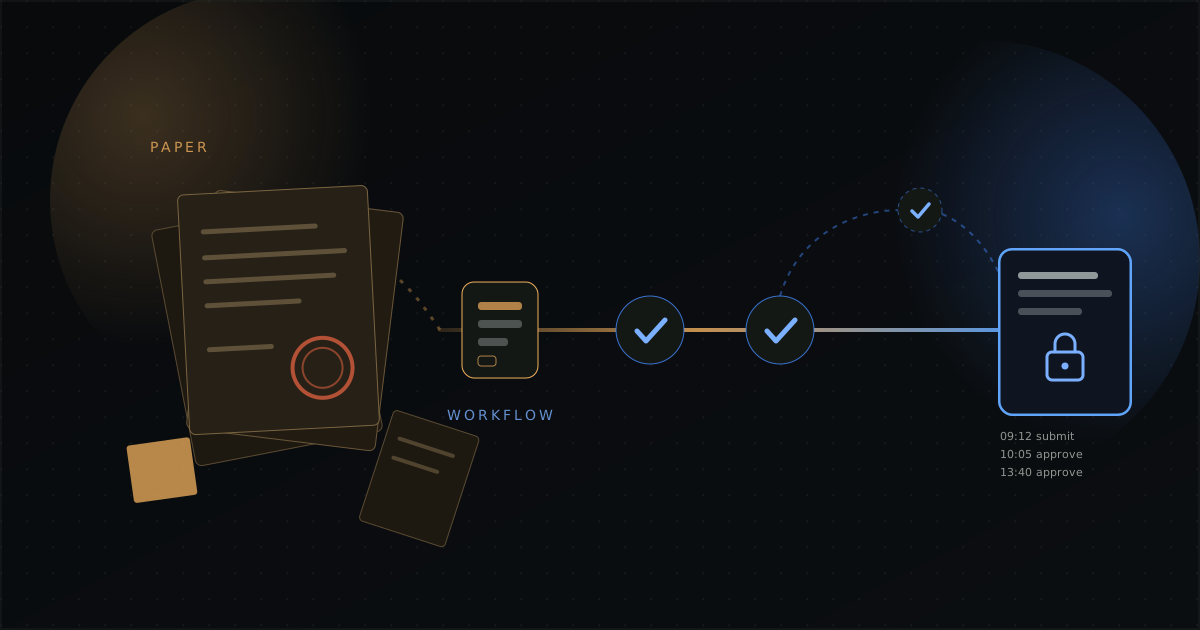
A purchase request crosses four desks, is returned because a quotation is missing, and waits while an executive travels. Nobody can say where it is without opening a folder. Document and approval work like this is one of the most tangible first steps in digital transformation.
These projects often stall the same way: a tool is chosen first and the old steps move onto a screen, so documents wait as long as before, only in an inbox. Work through four steps instead.
1. Map the current process
Following the value-stream mapping idea of a current-state map, follow several real documents of one form from submission to completion. For each step record who does it and who covers absences, touch time, waiting time, how often and why it is returned, and where originals and attachments are kept. Date-stamping sample documents for a few weeks is usually enough to see where time goes.
2. Simplify before digitizing
Michael Hammer argued in Reengineering Work: Don't Automate, Obliterate that processes should be redesigned rather than automated as they are. Ask of each step: does it decide anything, or only pass work on? Does the approval authority match the risk or amount? Is the same check done twice when a system could do it? Why are requests returned? Changing approval authority is a policy decision, so agree the future state with management and internal audit before building.
3. Digitize with the right pattern
- E-forms with workflow for requests with conditional approval routes, such as leave or purchasing; plan delegation and reminders.
- Document management for contracts and policies that need search, versions and permissions.
- E-signatures where documents must be signed, especially with outside parties, at a level that matches the risk.
- ERP or HR integration where requests use or update core data, such as budget checks.
Thai legal considerations
This is a summary to frame questions for advisers, not legal advice. Thailand's Electronic Transactions Act B.E. 2544 (2001), as amended, recognises electronic data and electronic signatures; ETDA's Digital Law overview summarises the provisions. In 2020 ETDA published a recommended standard on electronic signatures describing three types, from general signatures to reliable signatures backed by a certificate. Scanning paper archives must follow the Electronic Transactions Commission's rules on document conversion, and forms that collect personal data fall under the PDPA. Confirm signature levels, conversion procedures and retention periods with legal advisers, auditors and the data protection officer before retiring paper.
Audit trail and access
Record who submitted, approved or rejected each request, when, with what comment and on which version. Lock documents after approval so changes create a new version and a new approval. Grant access by role, separate requesters from approvers, record delegated approvals as such, and make sure administrators cannot silently alter the audit trail.
Adoption
Pilot one form in one department. Make approval easy for executives, including on mobile. Give each role a one-page guide, define a fallback when the system is unavailable, and set a date to stop accepting paper; running both indefinitely leaves the data incomplete.
4. Measure, then expand
Compare cycle time, waiting time per step, return rate, untraceable documents and the share of requests handled in the system against the baseline.
In a hypothetical example of 200 purchase requests a month, waiting time is 1 + 1.5 + 1.5 + 2 = 6 working days and 25% are returned. After executives approve only amounts above a limit (assumed 20% of requests), the ERP checks budget automatically and quotations become mandatory attachments, average waiting time falls to 0.8 × 1.5 + 0.2 × 2.5 = 1.7 working days and returns to 10%. The gain comes mainly from changing the rules, not from replacing paper with screens. These are illustrative figures, not customer results.
Bring the current process map, sample forms with personal data removed, monthly volumes, the approval authority table and the systems to integrate. UNIXDEV designs and builds these systems through digital workplace and collaboration platforms. For the wider plan, see starting digital transformation and the first 90 days.