
DevOps and the hidden cost of manual delivery
Find the cost of fragile releases, repeated manual work and configuration drift before deciding which DevOps changes to make.
By UNIXDEV Team · 2 min read
Original published · English edition
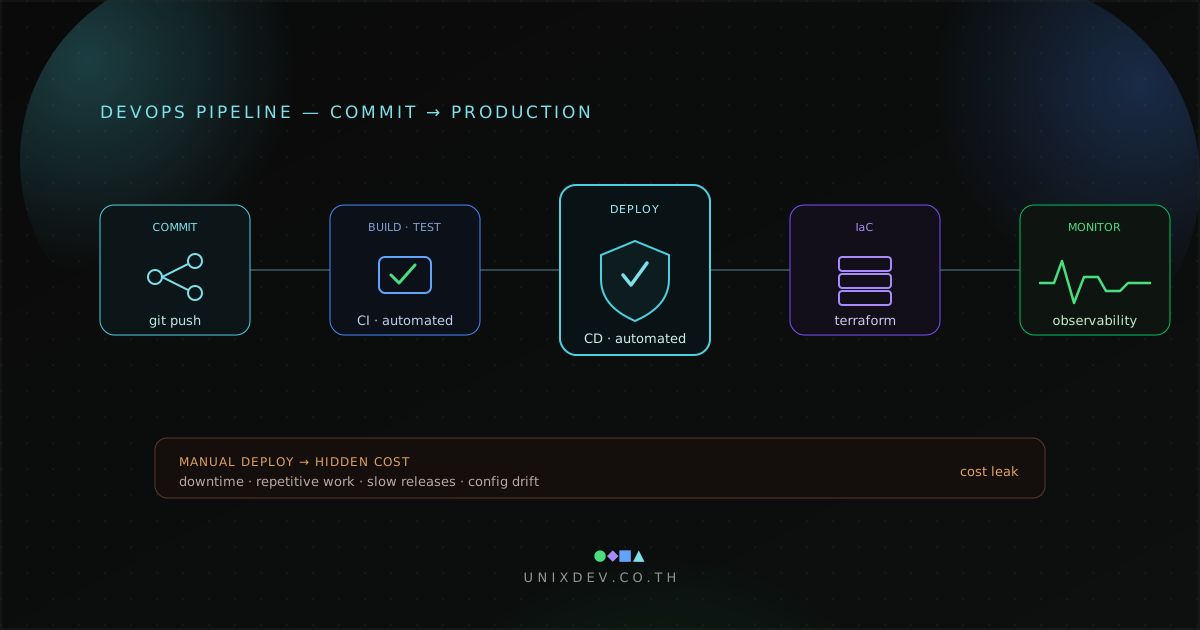
A team can spend heavily on software and still lose time to the way it releases and supports that software. DevOps improvement begins by making that work visible.
More than combining two job titles
DevOps is a way for development and operations to share responsibility, automate repeatable work and learn from production. Tools support the process, but a tool cannot resolve unclear approvals or competing objectives on its own.
Six signs worth investigating
- A release depends on one person and undocumented commands.
- Production differs from the test environment in ways nobody tracks.
- Testing happens late, or is skipped because a release is urgent.
- The team learns about failures from users before its own monitoring.
- Rollback means improvising during an incident.
- The same manual tasks and incidents recur without an improvement plan.
Where the hidden costs appear
Service interruption
Count the duration and business impact of incidents, including internal disruption. Do not assume every minute has the same financial value; use the affected workflow and observed consequences.
Repeated manual work
Measure time spent preparing environments, running releases, collecting logs and fixing configuration. Include review and recovery work when comparing automation with the current process.
Slow feedback and delayed changes
Large releases and slow tests make defects harder to isolate. Waiting for environments or approvals can hold up useful changes even when development is finished.
Configuration drift
Untracked changes can create security and reliability problems. A reproducible configuration and a review trail make it easier to understand what changed and restore the intended state.
Four areas to improve
- CI/CD: make building, checking and delivering a release repeatable, with explicit approvals where needed.
- Infrastructure as code: version the relevant infrastructure configuration and review changes.
- Automated tests: target important behaviors and failure risks rather than a coverage number alone.
- Observability: collect useful metrics and logs, route actionable alerts and identify who responds.
Start with one delivery path
Pick a service with a recurring bottleneck. Record the current steps and elapsed time, then improve a bounded part of the path. Add a reliable build, meaningful checks and a tested recovery procedure before expanding to the rest of the estate.
A consultant can help with assessment or implementation, while an internal owner keeps business context and decisions available. Agree documentation and knowledge transfer so the improvement remains usable after the initial work.
What to measure next
Track delivery time, failure and recovery patterns, repetitive effort and whether users experience fewer problems. Review changes in context; a faster release is not an improvement if it increases unrecovered failures.
Explore DevOps and managed services, or read the companion guide to SRE and reliability objectives.