
Wazuh and security monitoring: articles and guides
Articles on Wazuh and security monitoring, explaining how Wazuh works as a SIEM/XDR, how it can be used alongside existing EDR or antivirus, and how to plan a deployment, from sizing and log retention to agent rollout, configuring Wazuh to detect ransomware with Sysmon, custom rules and FIM, plus preparing an organisation for ransomware, from prevention and backups to reporting under Thai law. For IT and security teams evaluating or preparing to install monitoring tools.
Articles on this topic (5)
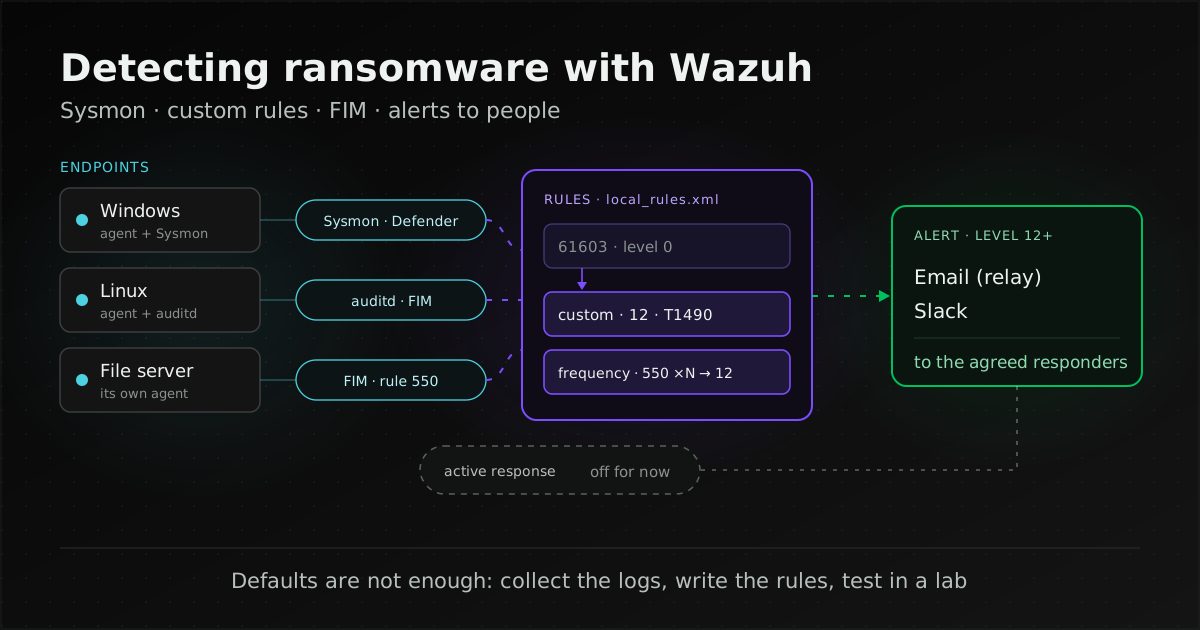
Detecting ransomware with Wazuh: what to configure
English edition
How to configure Wazuh to detect ransomware: Sysmon collection, custom rules for shadow copy deletion, real-time FIM, alert routing and safe lab testing.
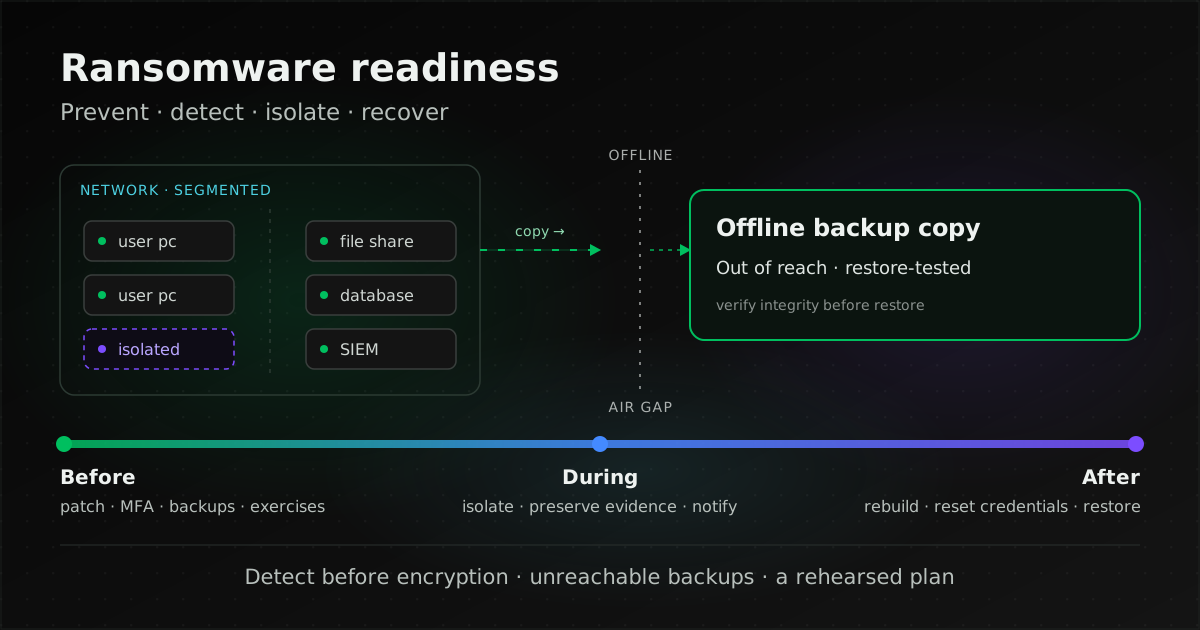
Ransomware: how Thai organisations prepare and respond
English edition
How ransomware works, how Thai organisations can prevent it, backups attackers cannot reach, the first hour, and PDPA and Cybersecurity Act duties.
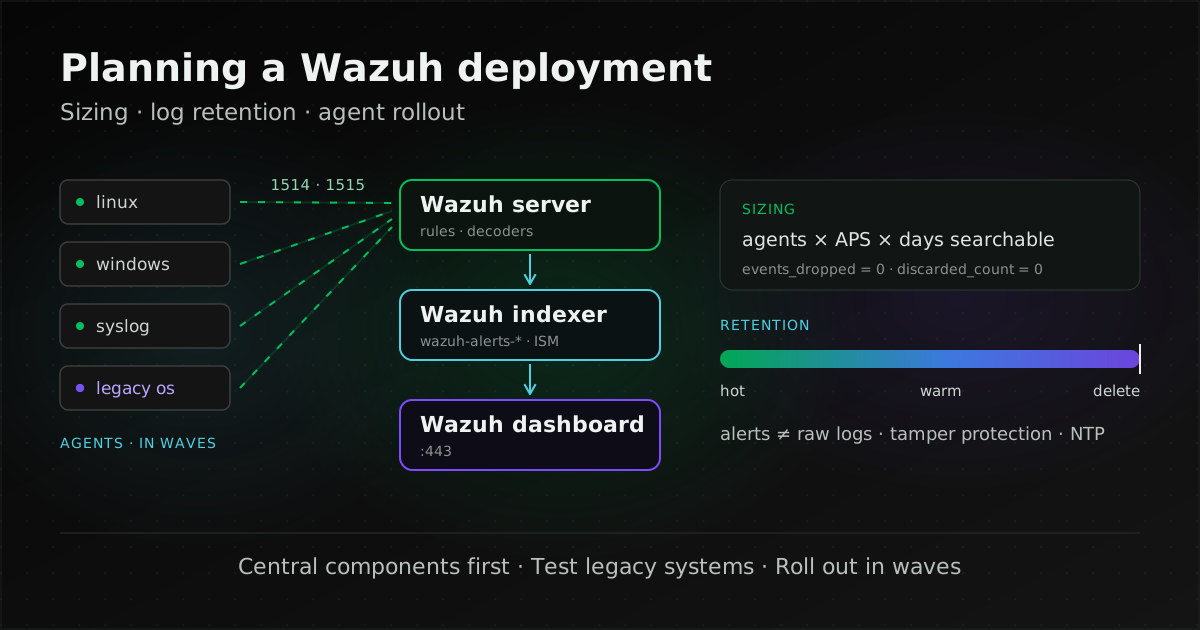
Planning a Wazuh deployment: sizing, retention and agent rollout
English edition
Plan a Wazuh 4.14 install: all-in-one or distributed, sizing by agents and alerts per second, log retention under Thai law, legacy agents, alert noise.
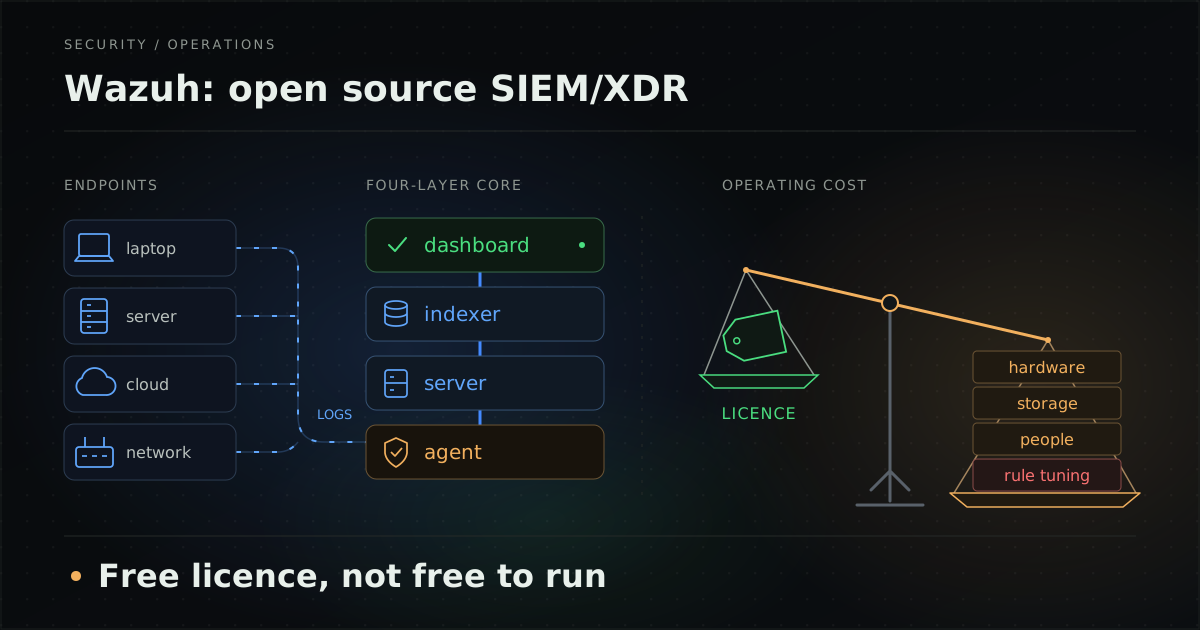
What is Wazuh? Open source SIEM/XDR vs commercial SIEM, and which organisations it fits
English edition
Wazuh is an open source SIEM/XDR platform with no licence fee, but its real cost lies in hardware, log storage, people and rule tuning. Commercial SIEMs bill on data volume, resources or nodes instead. It fits organisations with a team or partner to run it.
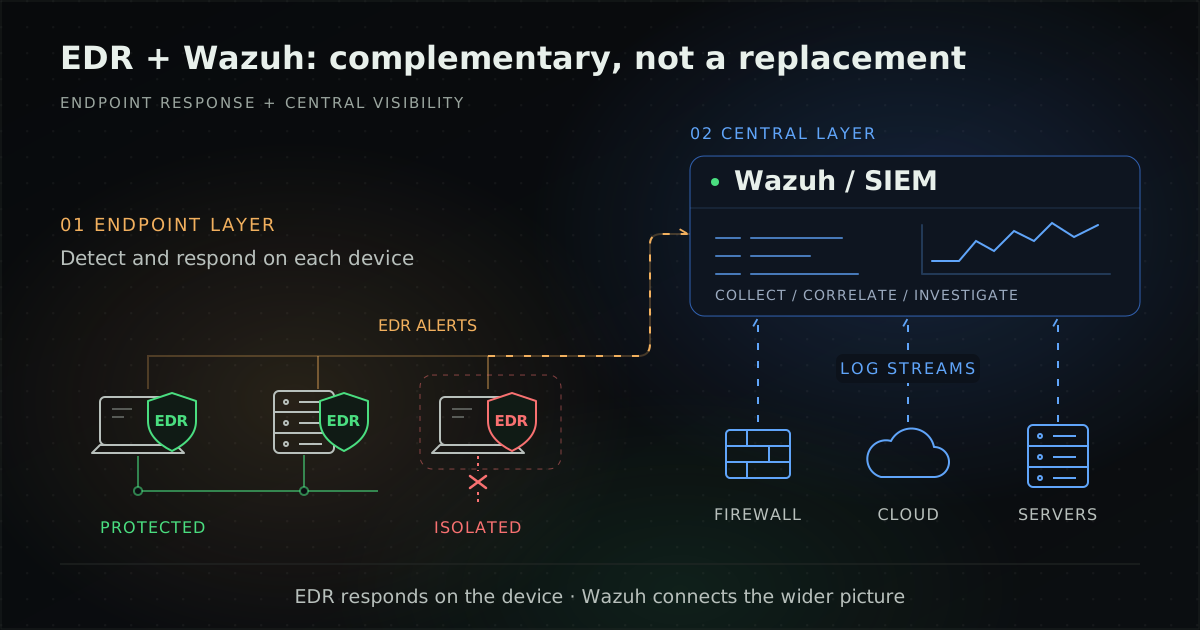
Already have EDR or antivirus? Do you also need Wazuh? Roles compared and how to combine them
English edition
EDR detects and responds on endpoints, while Wazuh fits as the central log and SIEM layer that ingests EDR alerts and adds file, software, vulnerability and configuration checks. The two usually complement each other, and Wazuh should not replace EDR.