
Maintaining and improving legacy systems: articles and guides
Articles on maintaining and improving systems an organization still depends on, such as systems past end of support, undocumented systems, taking over from a previous vendor and corporate website care. For IT teams responsible for older systems and planning modernization.
Articles on this topic (5)
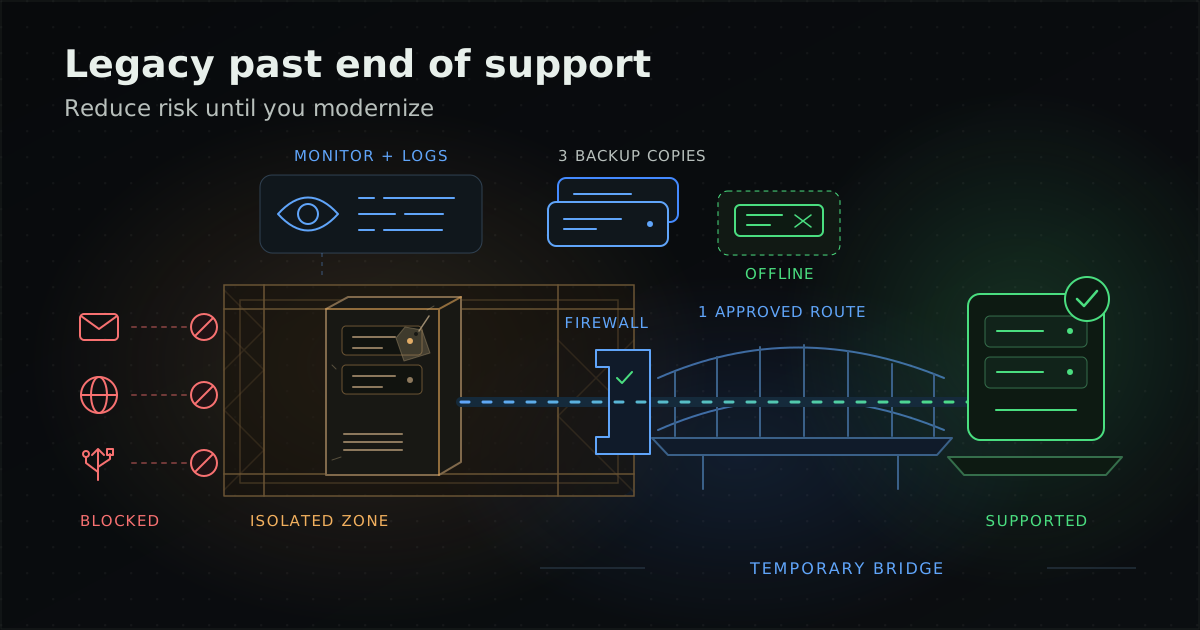
Legacy systems past end of support: reducing risk until you modernize
English edition
If a legacy system cannot move yet, find which parts are end-of-life, isolate it in its own network zone, cut unnecessary data flows, monitor proactively, keep backups you have restored, and set criteria for when to speed up modernization. Compensating controls reduce risk; they do not remove vulnerabilities.
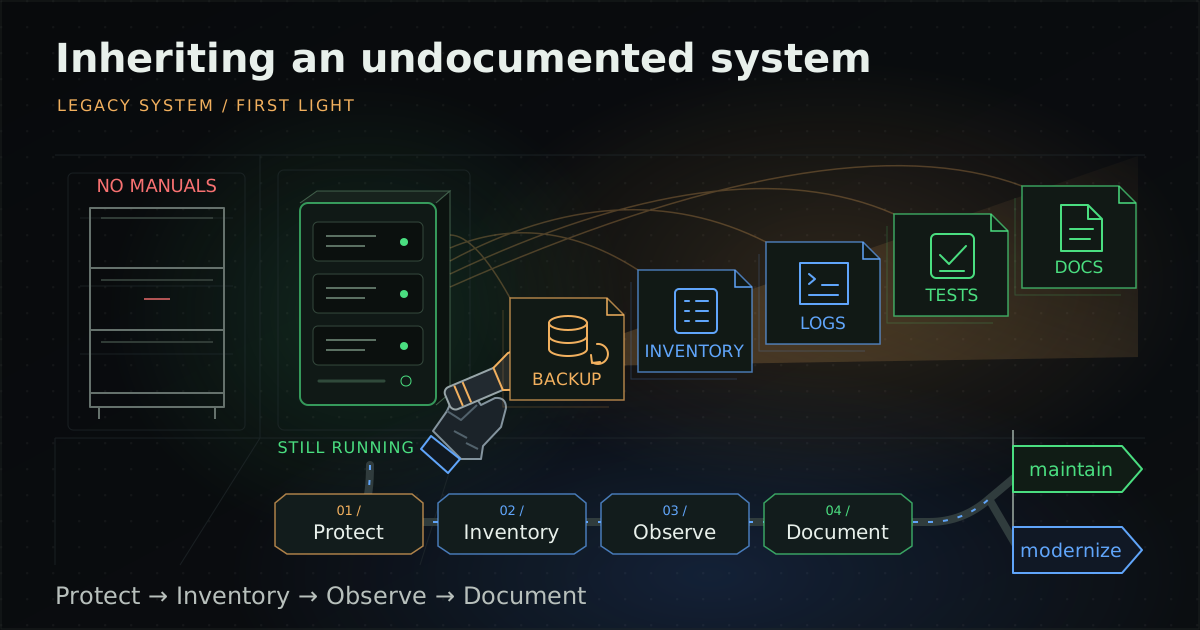
Inheriting an undocumented legacy system with nobody left: where to start
English edition
Protect what exists first: take a full backup, test a restore and capture the server state before touching anything. Then rebuild the inventory from the running system, build an SBOM, observe logs, write characterization tests and document as you learn before deciding to maintain or modernize.
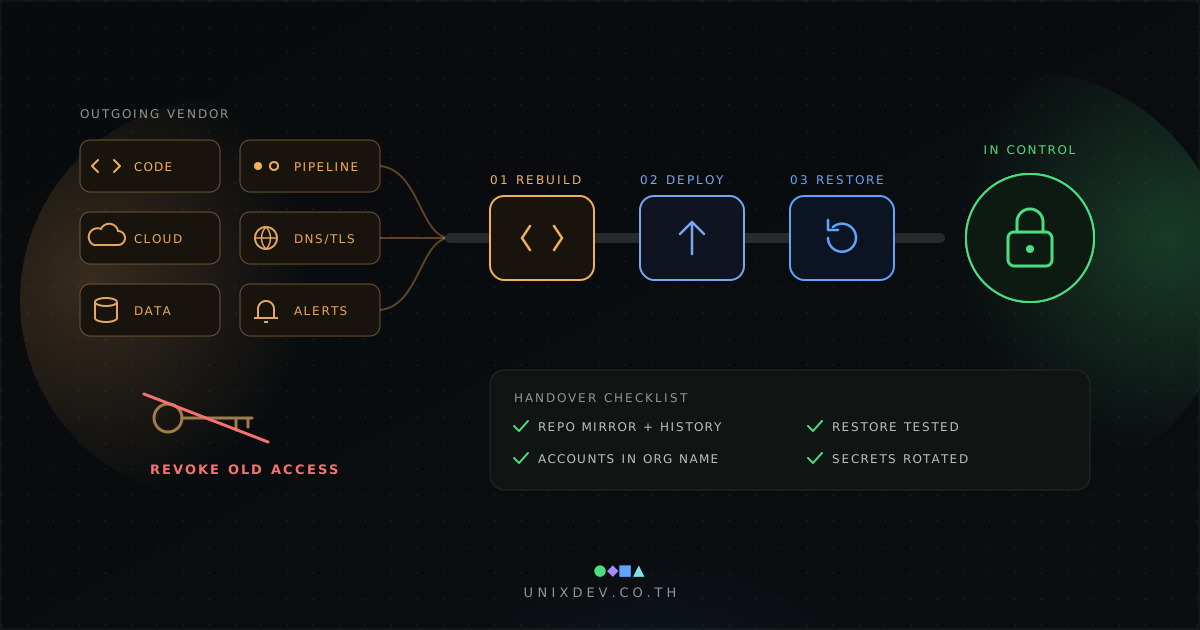
Switching software vendors: what to take over from the outgoing team
English edition
When a vendor leaves, take over the code with full history, the pipeline, cloud accounts, domains, backups and runbooks in your organisation's name. Prove it by having the new team rebuild, deploy to staging and restore on its own, then revoke the old team's access.
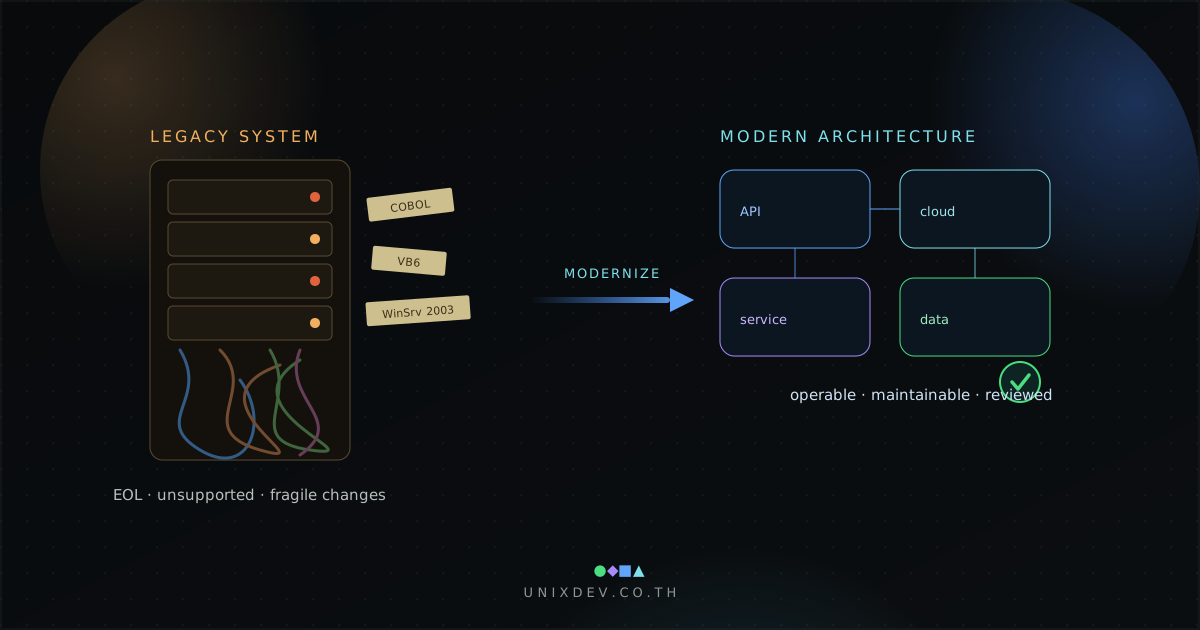
What is a legacy system? Examples and modernization
English edition
A legacy system is software a business still relies on but finds hard to change or support. See examples, risks and four ways to modernize it.

Website maintenance: updates, performance, security and recovery
English edition
Define a practical maintenance scope for an existing company website or online store, including access, updates, monitoring and restore checks.