
Legacy system modernization: how to move forward without a blind rewrite
Recognize maintenance risks, recover system knowledge and compare rehosting, replatforming, refactoring and rebuilding against the business need.
By UNIXDEV Team · 3 min read
Original published · English edition
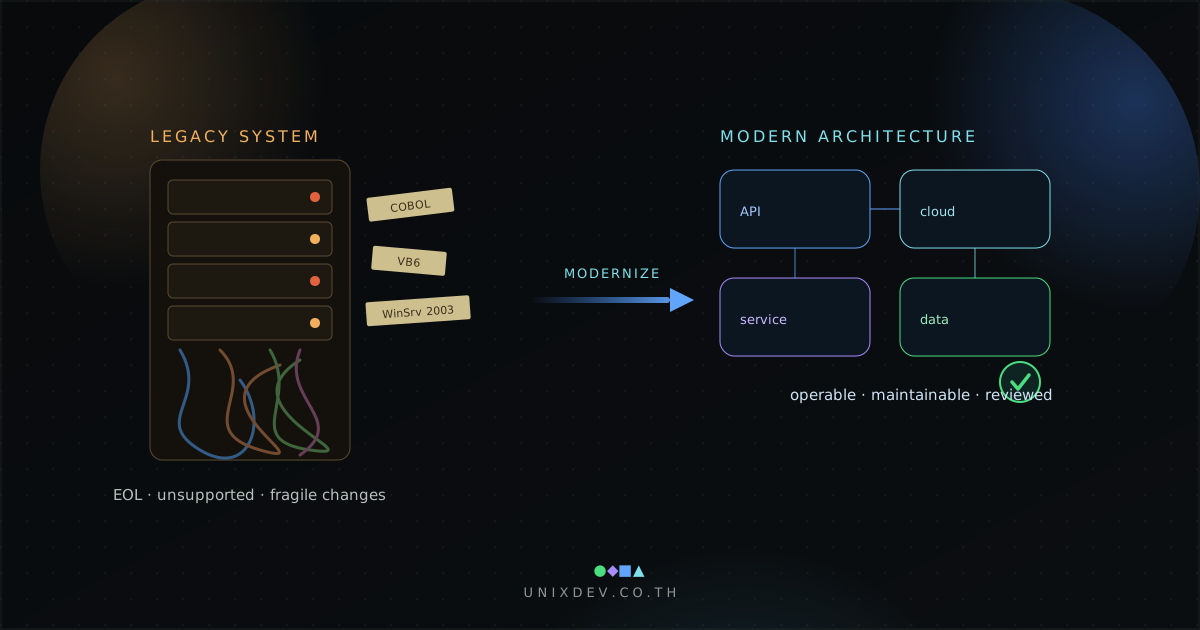
A legacy system is not simply old software. It is a system whose constraints make it difficult to change, operate or support, even though the business may still depend on it.
Six signs to examine
- Dependencies or platforms no longer receive the support you need.
- Only one person understands an important part of the application.
- Changes are difficult to test and release safely.
- Integration relies on fragile manual transfer or undocumented behavior.
- Performance or capacity limits affect real users.
- Access, backup or recovery arrangements are unclear.
These signs call for an assessment. They do not automatically justify replacing the entire system.
Why modernization gets postponed
The risk of change is easier to see than its benefit
The existing system works well enough on an ordinary day, while a migration has an obvious cost and interruption risk. Describe the recurring operational cost and constraints with evidence so both sides of the decision are visible.
Knowledge lives with people
Business rules may exist only in code or in the memory of long-serving staff. Recover that knowledge through workflow reviews, representative records and tests before changing the implementation.
Funding does not match continuing work
A one-time project budget may not cover assessment, gradual improvement and ongoing operation. Plan the phases and operating costs explicitly rather than treating maintenance as an afterthought.
No one can coordinate the decision
Modernization crosses business units, suppliers and technical teams. Identify an owner who can resolve priorities and secure decisions, with technical support for the trade-offs.
The team fears a failed cutover
Reduce uncertainty through rehearsal, data reconciliation, rollback criteria and a clear approval process. Some systems can change in stages; others need a tightly planned transition window.
The cost of doing nothing
Unsupported components, scarce skills, repeated defects and slow delivery can accumulate. Assess these risks against the actual system and business consequences. Avoid using age alone as a proxy for security or reliability.
Four modernization approaches
- Rehost: change where the system runs with limited code change.
- Replatform: update selected infrastructure or platform components.
- Refactor: improve internal structure or interfaces while preserving required behavior.
- Rebuild: create a replacement when the business need or system condition justifies it.
A staged plan can combine these approaches. Define how old and new parts exchange data and how each stage will be accepted.
Start with a supportable next step
Inventory the code, data, accounts and dependencies. Verify backups and restore procedures. Document critical workflows and establish a test environment. Then compare options with scope, risks and acceptance checks.
UNIXDEV’s legacy application maintenance service begins with that assessment. The content-platform operations case study illustrates ongoing care alongside change without claiming that every workstream finished at once.