
Choosing a software development company in Thailand: ten checks before signing
Assess a software partner through delivery evidence, team ownership, scope, testing, source-code rights and support, rather than the pitch alone.
By UNIXDEV Team · 3 min read
Original published · English edition
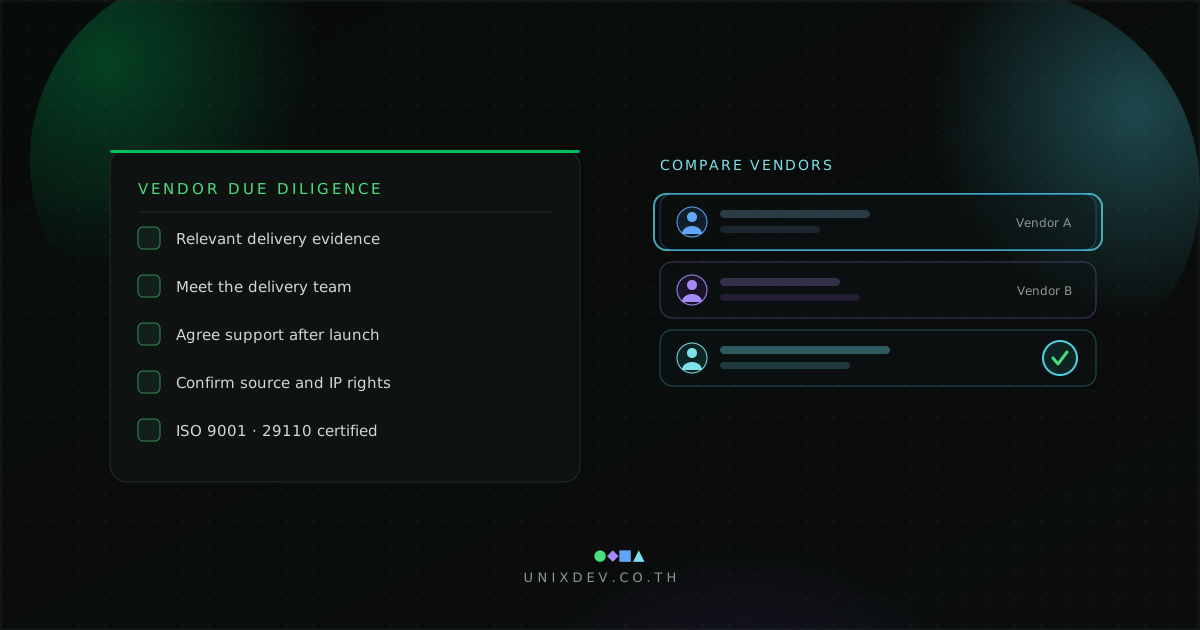
Proposals are easier to compare when they answer the same questions. The goal is to understand what the supplier will deliver, who will do it and how both teams will respond when the project changes.
Ten checks before signing
1. Relevant experience
Ask about a comparable workflow or technical problem, not only a recognizable logo. Establish what the team actually owned and what evidence can be shared with permission.
2. The delivery team
Clarify the people and roles assigned after the sale, their availability and how substitutions are handled. A strong pitch does not identify the eventual delivery team by itself.
3. Requirement changes
Ask how an open question becomes a decision and how a change affects cost, scope and timing. A process should allow useful change without leaving commitments ambiguous.
4. Support after launch
Distinguish warranty fixes, maintenance and additional development. Agree coverage hours, severity definitions, response targets and escalation. A response time is not the same as a resolution time.
5. Quality practices and certifications
Check certification status and scope, and ask how the process appears in day-to-day delivery. A certificate is supporting evidence, not a guarantee that a particular project will succeed.
6. Code and data ownership
Review ownership, licenses, repository access, build instructions, credentials and data-export arrangements. Include a practical handover, not just a statement that the code will be yours.
7. Communication and progress
Agree a review cadence and what will be demonstrated. Ask how risks, decisions and dependencies are reported. Progress should include inspectable work and open issues.
8. Price and exclusions
Compare equivalent scope. Testing, migration, hosting, licenses and support can change the total substantially. A low amount is not proof of poor quality, but unexplained omissions deserve questions.
9. Testing and acceptance
Ask who defines acceptance, who tests it and what evidence is retained. Include permissions, exceptions, integration failures and recovery where they matter.
10. Escalation
Know who can make decisions when delivery stalls or a serious incident occurs. The process should identify responsibilities on both sides.
Warning signs worth discussing
- Outcomes are guaranteed before the system or data has been examined.
- Only demonstrations are offered as acceptance evidence.
- Ownership and support are deferred until after signing.
- Scope changes have no documented approval path.
- References reveal confidential customer details without permission.
Use the RFP or demo to resolve uncertainty
Bring a representative workflow and ask the team to explain how it would discover requirements, handle exceptions and test the result. Ask what remains unknown and what assessment is needed before committing to cost or timing.
Use a consistent scorecard, but keep the judgment tied to the project. A small, well-bounded engagement may need a different delivery model from a critical platform replacement.
Explore UNIXDEV’s development process and published experience, then send the project context for an initial discussion.