
Backup and system recovery: articles and guides
Articles on backup and recovery in practice, from designing backups that survive ransomware with immutable or offline copies, backups in Proxmox VE and storing files in Huawei Cloud OBS, to preparing backups before an upgrade or a system takeover and what to write about backups and restore tests in MA contracts and TORs. For IT teams and system owners who need restores that work when something goes wrong.
Articles on this topic (12)
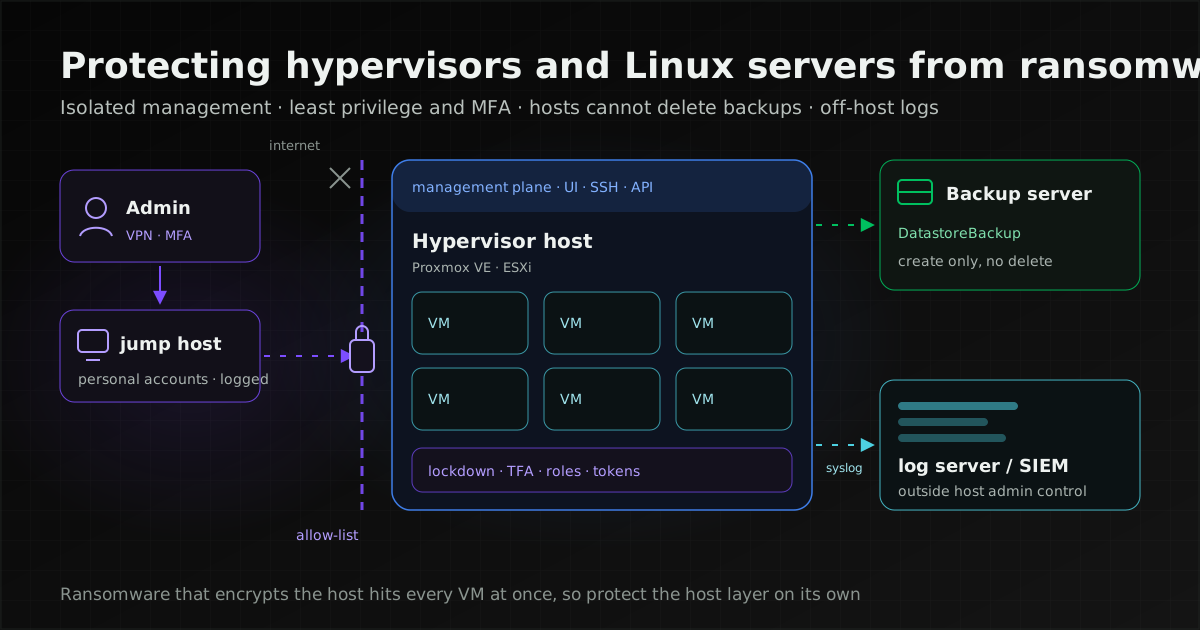
Protecting hypervisors and Linux servers from ransomware
English edition
Hardening ESXi, Proxmox VE and Linux servers against ransomware: isolated management, MFA and roles, lockdown mode, PBS backup rights and host logs.
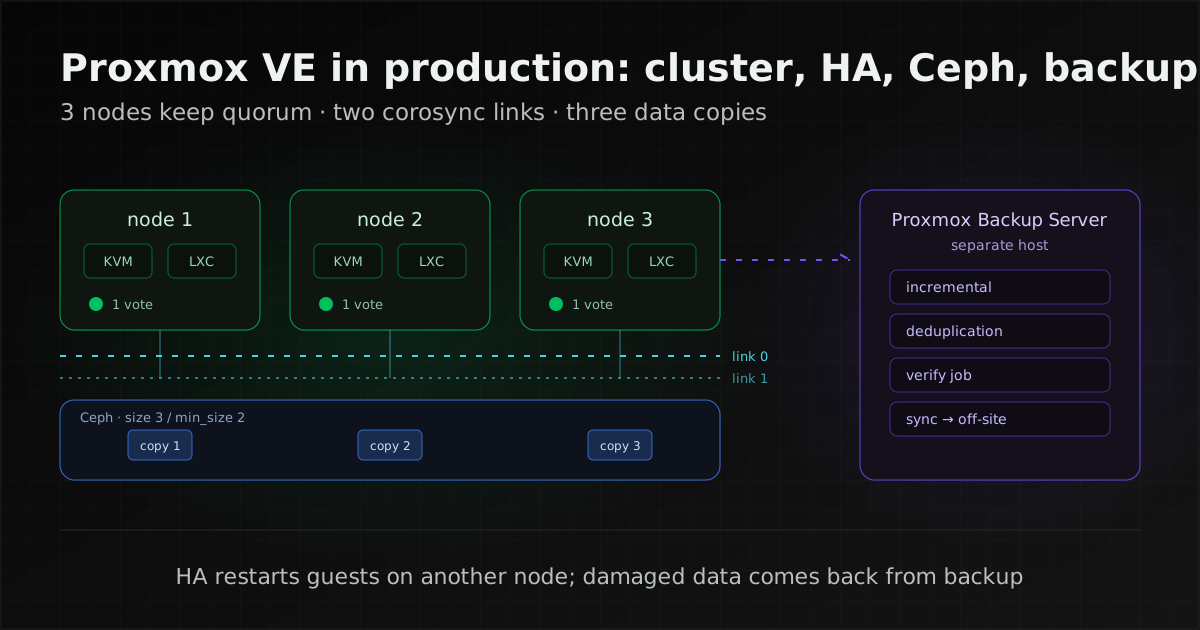
Proxmox VE in production: cluster, HA, Ceph and backup
English edition
Designing a production Proxmox VE cluster: node count, quorum and QDevice, watchdog-fenced HA, Ceph or ZFS replication, backup and a go-live checklist.
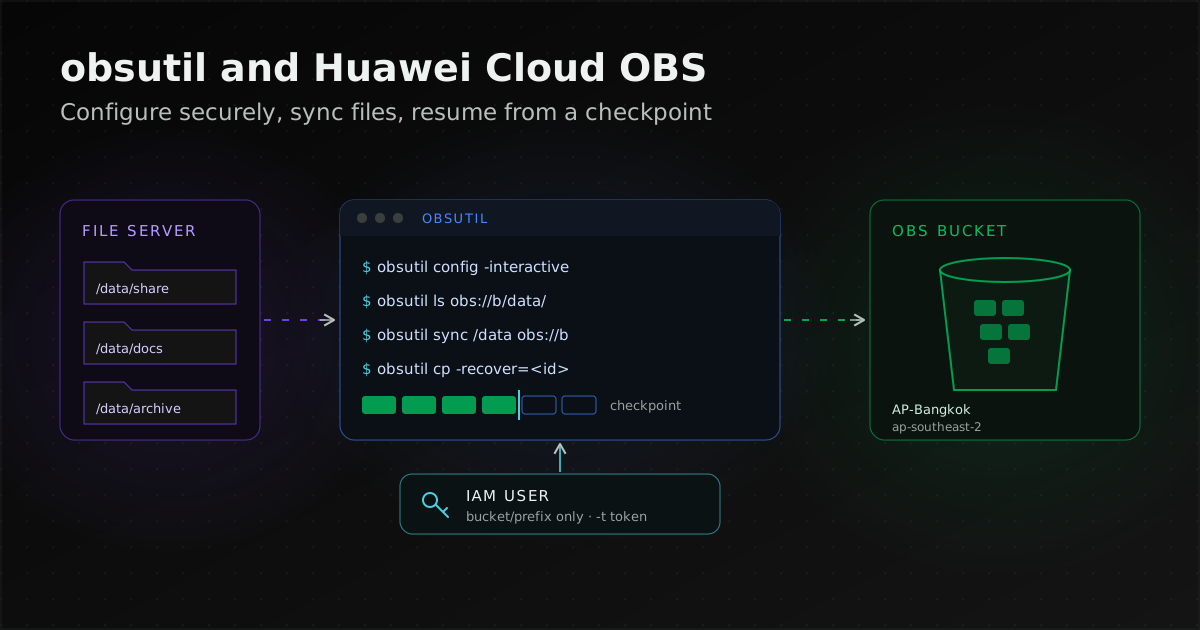
obsutil: moving and managing files in Huawei Cloud OBS
English edition
obsutil is the Huawei Cloud OBS command-line tool: download it, configure the AP-Bangkok endpoint with a least-privilege IAM user, use cp, sync and -recover.
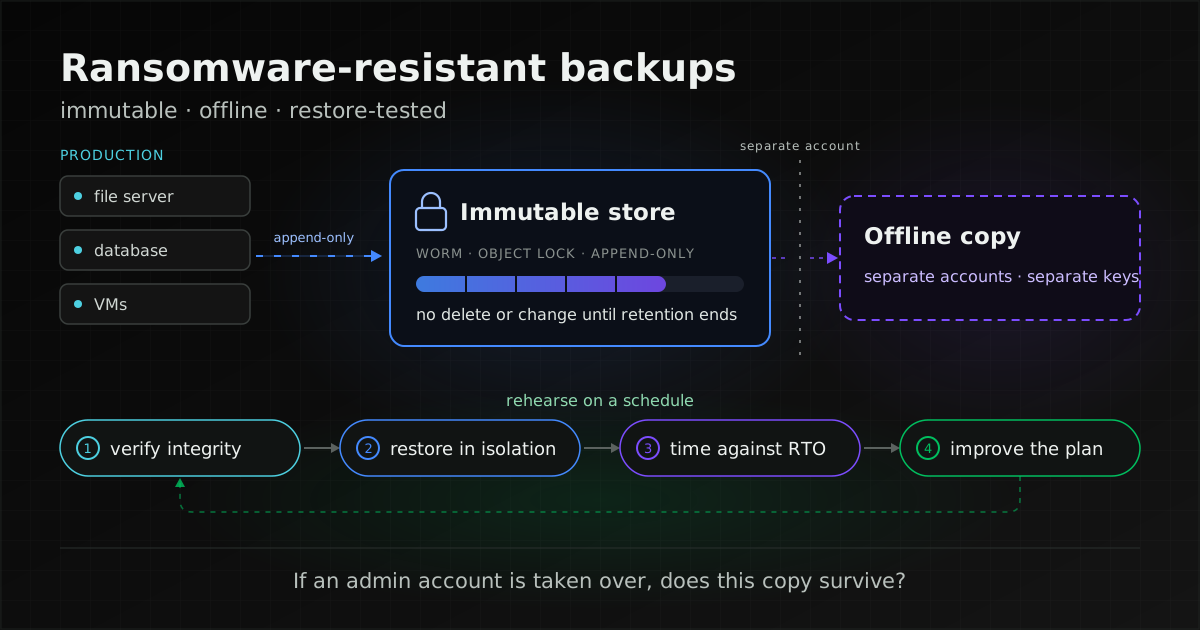
Ransomware-resistant backups: immutable, offline or air-gapped?
English edition
What makes a backup ransomware cannot delete: offline vs air-gapped vs immutable storage such as Object Lock, separate credentials, and restore tests.
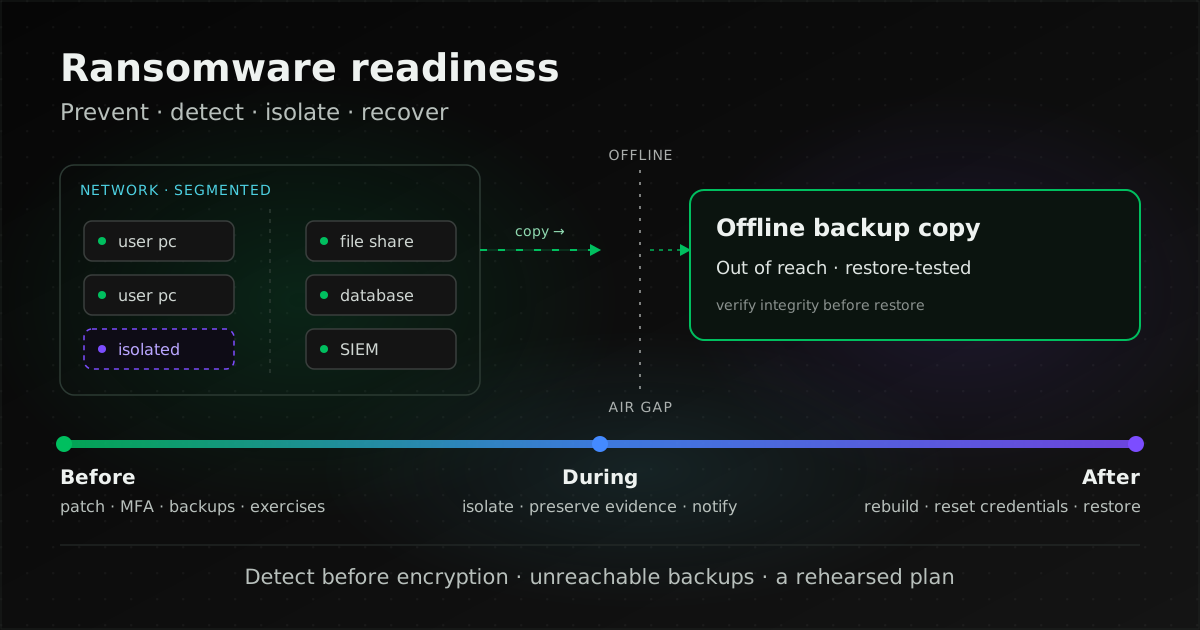
Ransomware: how Thai organisations prepare and respond
English edition
How ransomware works, how Thai organisations can prevent it, backups attackers cannot reach, the first hour, and PDPA and Cybersecurity Act duties.
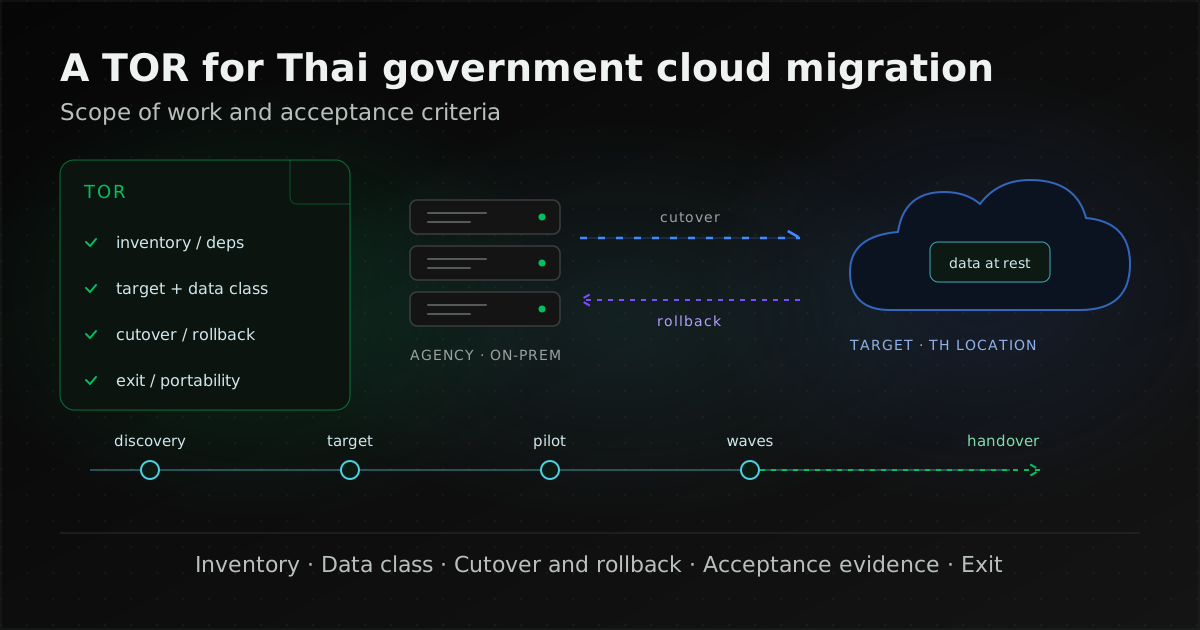
Thai government cloud migration TOR: scope and acceptance
English edition
What a Thai government TOR for cloud migration should specify: inventory, target, data classification, NCSA rules, cutover, acceptance evidence and exit.
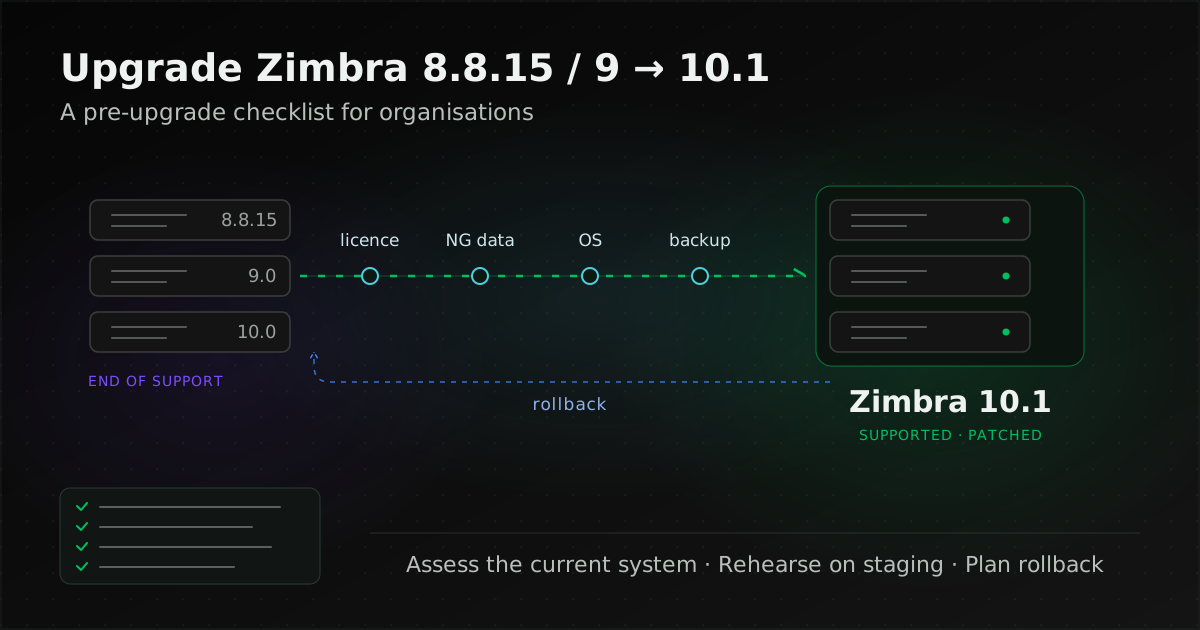
Zimbra 8.8.15/9 end of life: upgrade checklist for 10.1
English edition
Zimbra 8.8.15, 9.0 and 10.0 get no more patches; 10.1 is the supported line. Check the new licence key, NG modules, OS, backups and rollback first.
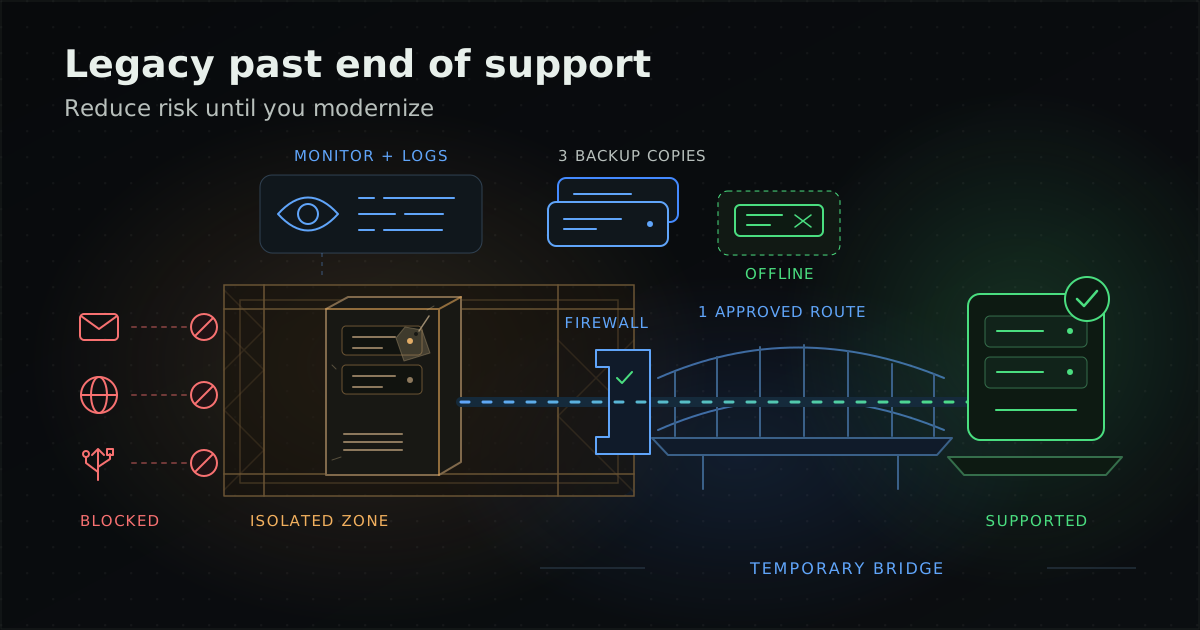
Legacy systems past end of support: reducing risk until you modernize
English edition
If a legacy system cannot move yet, find which parts are end-of-life, isolate it in its own network zone, cut unnecessary data flows, monitor proactively, keep backups you have restored, and set criteria for when to speed up modernization. Compensating controls reduce risk; they do not remove vulnerabilities.
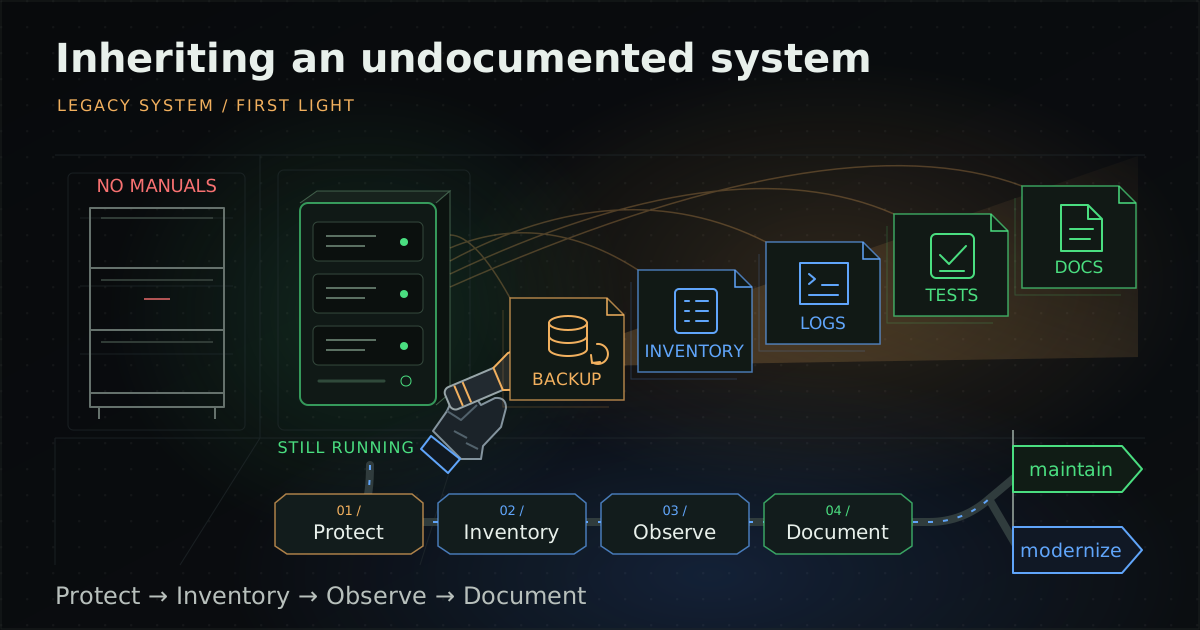
Inheriting an undocumented legacy system with nobody left: where to start
English edition
Protect what exists first: take a full backup, test a restore and capture the server state before touching anything. Then rebuild the inventory from the running system, build an SBOM, observe logs, write characterization tests and document as you learn before deciding to maintain or modernize.
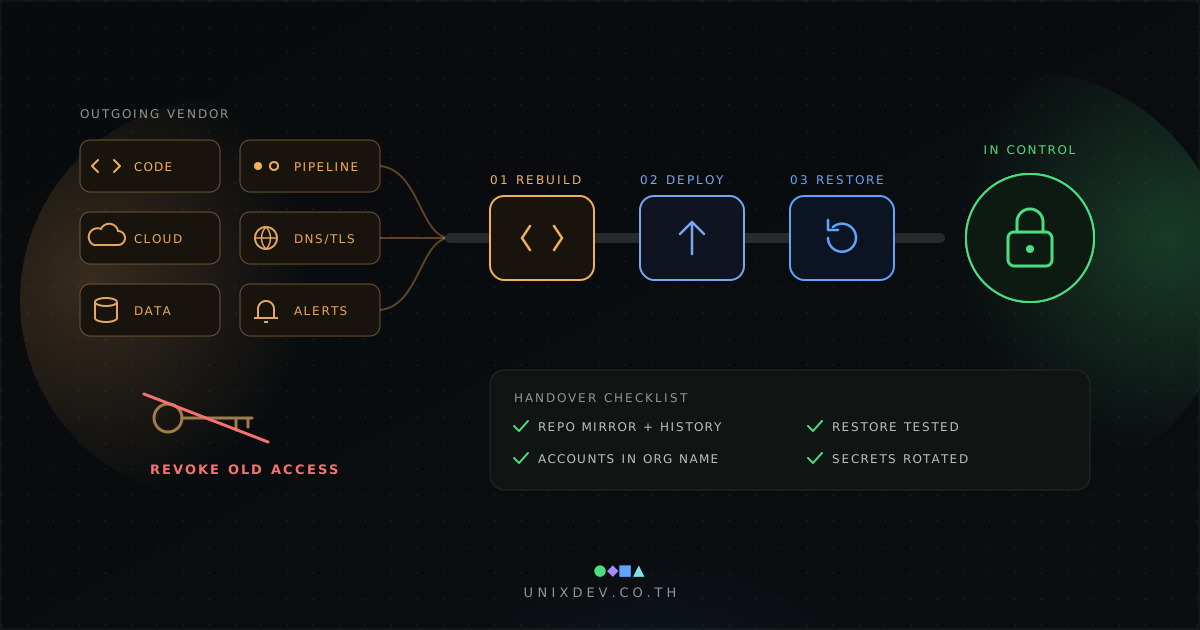
Switching software vendors: what to take over from the outgoing team
English edition
When a vendor leaves, take over the code with full history, the pipeline, cloud accounts, domains, backups and runbooks in your organisation's name. Prove it by having the new team rebuild, deploy to staging and restore on its own, then revoke the old team's access.
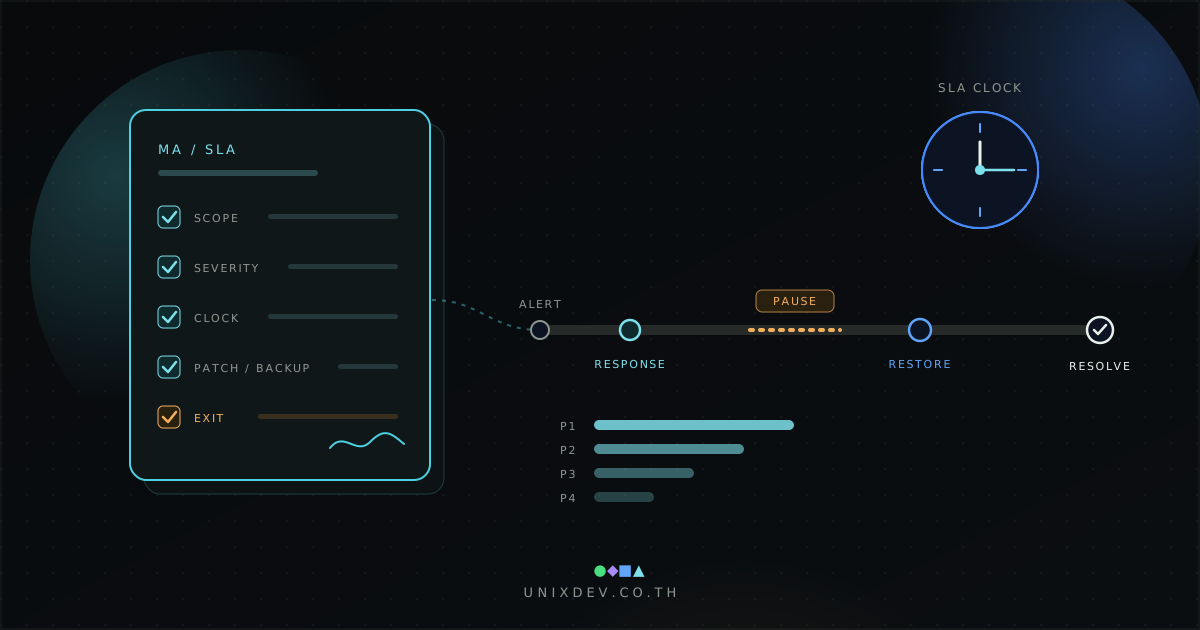
MA and SLA contracts: what to check before you sign
English edition
Check an MA and SLA before signing: scope vs change requests, severity, response vs resolution, the SLA clock, patching, backups, credits and exit.

Website maintenance: updates, performance, security and recovery
English edition
Define a practical maintenance scope for an existing company website or online store, including access, updates, monitoring and restore checks.